
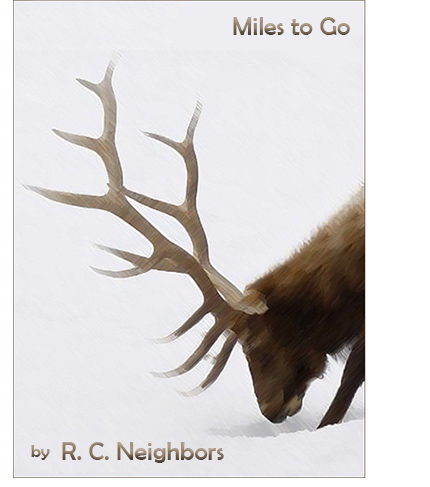
Gene Hudson came to Bozeman for the elk. It was late October, the end of rut, when the herds migrated to lower elevations, north out of Yellowstone, to mate before winter. He wanted another trophy to go next to his deer and his antelope, his bear and his cougar. The day had started in Oklahoma with Rita's bitching about his trip. "What kind of jackass buys himself a vacation for his own damned birthday," she'd asked, "to walk around—alone—in the woods?"
"This kind," Gene said and slammed the door when he left. He had planned the hunt months before. He knew what he was doing, and no one was going to tell him otherwise. Gene barely spoke to another soul as he drove from Okay to Tulsa, boarded the plane, and flew to Montana.
He reached his cabin right around the time he was born, 3:15 p.m. "Happy fifty-fifth," he muttered to himself. It seemed the sort of thing you might celebrate, but Gene was alone and who would he talk to even if he wanted to? His son Eric would be studying or cutting into a cadaver. His younger son Seth would be working—some gas station or another?—and wasn't speaking to him. And his youngest, Allison, would be in study hall. He could always call Rita, but he was still angry with her. Besides, shouldn't his family be calling him?
Gene had never been close to his children, and had grown even more distant in the past couple of months. He felt older, felt it in his bones. In the mirror, his eyes and cheeks sagged, and the beard he'd grown for the hunt came in grayer than he remembered. He had become absentminded and forgetful, too, having trouble staying on task. For some reason, his thoughts continually dwelt on his father, gone now for over forty years. Rita had noticed the change and suggested he see someone, maybe a therapist, but he didn't have time for such hippy bullshit.
Gene shoved his phone into his pocket and walked from his rental car to the cabin he had rented for the week. It looked like something out of a Davy Crockett miniseries, coarse and rustic, built from foundation to roof with what appeared to be whole tree trunks. The sort of dwelling a man lived in, the kind where his forefathers had dwelt. He smelled the mold, the dank pine, the undisturbed age, and felt, for the first time in a long while, linked to all those dead men.
Too eager to rest in the cabin, Gene decided to explore the area. He dressed in his fleece-lined camo, orange vest, and hat, and strode out the door carrying his Remington Woodsmaster rifle. He hiked past his car, through a cluster of aspens, and over the hillside. The air was temperate here, but the sky overcast, throwing a gray hue over everything. A valley stretched below, filled with brush, the fallen timber gray and the grass already brown—all those plants either dead or dying. In the center of the valley, a creek meandered through the field and into an evergreen forest. Its trees stretched onto the mountains, along ridges that extended away from him, like the crooked fingers of an old man, like his fingers, spreading toward fog in the distance.
It would be good hunting ground. The elk would be out with the cold weather. There was a water source for them and plenty of cover, but at this time of day, they would be high on the mountains, in the dark timber, if they were here.
Gene trekked down the hillside. In the woods he felt connected—to the air, the trees, the animals at the end of his barrel. But it was more than that. He liked the control of it, the knowledge that he could beat these creatures. He marched beside the creek and watched a trout—he couldn't remember the species—flit under its surface, how it vanished in a flurry of silt to reappear ten feet away. After a few minutes, he arrived at the edge of the forest and hiked into the trees, following the direction the elk would have taken, away from the water and into the cover of the forest. He couldn't help but drag his fingers across the pine needles and let his mind wander.
In fact, as he hiked, Gene struggled to keep his mind focused on his task, to not let it wander to his father's last days. He remembered the astringent smell of the hospital room. His father, only fifty-five, lay in a lone hospital bed, as if under a spotlight. He looked yellow—yellow arms, yellow face, even yellow eyes when they occasionally fluttered open, accompanied by murmurs, soft and incomprehensible. As Gene said his goodbyes, he felt his father's hands, frigid and bloated, against his fingertips.
To resist these thoughts, he searched for signs of elk—his eyes darting from tree to broken twig to muddy embankment—and concentrated on his sensations. His sweaty socks. The crisp air in his lungs. His heartbeat. He found little sign that the animal were in the area, only some bark scraped from a tree, where a bull had rubbed the velvet from its antlers.
By early evening, Gene reached deep into the forest, where little light came through the canopy above. If the elk were here, he would have seen or heard them on their way to the creek. He thought for a moment, unsure of which direction the cabin lay, and eventually followed what he could of his own tracks. He imagined Rita's smug face, as he trudged along, how gratified she'd be over his disorientation. At him, the great hunter, nearly lost in the woods.
That's how his days went. Each morning he trekked along the creek, then up the mountain, and down the mountain. Eventually, a light snow dusted the valley. He found more signs of the elk—some droppings, a few tracks, all soon covered by the snow—but the animals remained hidden. Each day he grew more despondent as he continued disconnected from civilization and it went on without him. By the middle of the third day, he could no longer keep his mind focused on the hunt, but he could stop the intrusive thoughts of his father, just for a moment, when he thought of his family. He had trouble remembering anything recent, so he thought of older, happier memories.
Like the way Rita had practically skipped down the aisle, white lace along her arms and silk tulle concealing her smile.
How he low-crawled in their backyard with a nine-year-old, freckled Eric, mud on their faces, hunting starlings with a new BB-gun, but the only thing the boy shot was his younger brother's thigh.
Or when he missed an eleven-year-old Allison's swim meet because he couldn't get away from the office and apologized by taking her to SeaWorld. They sat in the splash zone and watched the huge animals leap and twist above the water. Her smile offered forgiveness, and she told him of her dream to be the trainer in the black wetsuit, balancing on the whale's nose.
In the forest Gene continued the hunt, but he couldn't keep hold of the few pleasant memories, no matter how he tried, as other, darker ones crowded his mind:
Rita had followed him, mascara running down her face, to that woman's house—what was her name?—and bashed his sideview mirror with a baseball bat.
Years earlier, he caught a teenage Seth in the backyard smoking pot. Gene's fists broke the silence between them—and Seth's nose. They rolled through the yard and smashed lawn furniture, bruised and bloodied, the both of them, until the police arrived, having been phoned by a neighbor.
And last year Gene walked in on Allison, just a fifteen-year-old girl, blowing some punk in her bedroom. Pistol in hand, Gene shoved the kid out of the house, pants still around his ankles. Allison and Gene had trouble looking each other in the eye after that, much less speaking.
A noise in the woods startled him, something like a scream. Like the guttural cry of some dying creature. But Gene knew what it was. He pulled an elk call from his pocket and mimicked the bugle. During rut, these sounds echoed for miles, calling females and challenging other males. Gene called again, and this time the bull answered.
He lay on the ground against a log and propped his rifle in the direction of the sound, his elbow on the wood. During mating season, the extra hormones made the elk less cautious, less able to detect predators, and soon a bull elk galloped onto an embankment fifty yards ahead and stamped at the ground. It was magnificent, close to five-feet-tall at the shoulder, with a nine-point rack, a dark neck and tawny flanks. Its harem—a group of several cows—followed it.
Gene stared at the bull in the crosshairs, its chest out and antlers high. He waited for the animal to turn to its side, so he could get it behind the front legs and take out the vital organs. They waited like that—for quite a while—the bull glancing around, ready to protect its family. Eventually, the elk's eyes landed on Gene.
Before either could react, a bush rustled nearby. The bull's ears perked up, but it was too late—a grizzly drawn by the bugle lunged toward the bull at full charge. It happened fast, but the details burned into Gene's mind. The muscular outline of the bear, six-feet-tall or more. Its brown fur, tipped in white. Its powerful claw in the air, slicing downward.
Startled, Gene jerked away. Fired.
When he looked back, the bear lumbered off, maybe grazed, but not seriously injured. Breathing heavily, Gene stood and stared at the downed bull on the embankment. He crept toward it, gun at the ready, but he couldn't see anything else around, the bear and other elk having vanished into the forest. One unsettled step at a time, Gene climbed the embankment and then towered over the beast, his face hardening.
The creature moaned and snorted. Its eye stared at him, wide in fear, and its legs kicked, trying to stand despite the shredded muscles in its front shoulder. Wide, bloody gashes spanned the width of the elk, from shoulder to chest, clean to the bone. Under the ragged flesh and past an exposed rib, Gene could make out the elk's heart beating—lub-dub, lub-dub—each beat drowning the wound with blood from a lacerated artery, draining the animal of life.
He aimed his rifle at the organ. The time the elk had left, the animal's whole world, was fear and pain. Better to end it quickly. As Gene checked the safety, though, he couldn't help but stare into the dark orb of the animal's eye, wild and pleading. With a sigh, Gene's face fell, and his eyes glazed. He felt a spark of something more than practicality—sympathy, maybe. Kinship.
Gene shouldered his rifle and knelt over the beast. Its heart slowed—lub... dub, lub... dub. It had only seconds left now.
Slowly, as if comforting a trembling child, Gene caressed the bull's bristly neck and murmured to it. "It'll be okay," he said. "It's almost over now."
The bull stopped kicking. Its haggard breathing slowed. Lub... dub... lub... dub... lub...
As Gene watched the still animal, a twig snapped nearby, and he jerked his head in its direction. It was dangerous here, he knew. The carcass would attract other predators, the metallic tinge of its blood already in the wind. Or the grizzly could return, and his dumb ass had left the bear spray back at the cabin. He had no time to field dress the bull and would have to leave it.
His eyes searched the area, and the shadows seemed to move. Sounds—swishes and grunts and growls—came at him from every direction, and his chest constricted. His heart pounded in his ears, and all he could imagine was what awaited him out there in the darkness. He clamped his eyes shut, releasing tears, and forced himself to breathe. With each breath, his pulse slowed, and the dangers in his mind grew quiet. When he opened his eyes again, the world was silent.
He took another deep breath, and before turning to go, he gazed at where the other elk had darted into the darkness ahead of him—to an unknown fate. No, he thought. He knew what awaited them. They'd eat. They'd have their calves in the spring. Raise them. Maybe mate again someday.
They went to live. For a time.
Gene took a last look at the bull and slipped away.
When he arrived at the cabin, he packed his few things and drove to the airport to exchange his ticket for an earlier flight. He boarded a plane, and as it rose into the air, he stared out the window. At the rows and rows of houses and apartments and office buildings and shopping centers. At the roads connecting in a maze of paint and asphalt and destination. The people scurried like ants—or something even smaller—until they were no longer even there. Soon, the buildings melted, too, into the grays and browns and dark greens of the earth. Only geometric shapes of color. Finally, they also disappeared under a cover of clouds, like the cotton innards of his mother's quilts. He thought of her rough, old hands, the warmth of her woodstove in winter, the smell of her—like snickerdoodles fresh from the oven.
As the skyline faded from red to orange, dark blue to black, Gene's thoughts moved to all those below him, the bear, the elk, the millions of lives going about their day—the people brushing their teeth, driving to work, playing with their children, the ones eating, sleeping, fretting, and dreaming, falling in love and falling out, arriving into the world and leaving it—all invisible. Insignificant. Frail.
But Eric and Seth were there. So were Allison and Rita. And Gene planned, for the first time in a long while, to join them.
Title image "Elk in Snow" Copyright © The Summerset Review 2022.
